


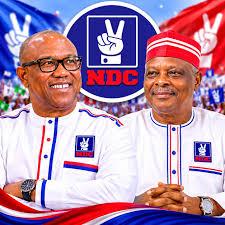
Former Bayelsa State Governor and National Leader of the NDC, Seriake Dickson, has declared that the internal crisis that recently threatened the unity of the party has been successfully resolved following extensive consultations with party stakeholders.
Dickson made the announcement after meeting with prominent political figures, including Peter Obi, as efforts intensified to restore harmony and strengthen the party's internal structures.
The resolution marks a significant step toward stabilizing the party after weeks of disagreements that had raised concerns among members and supporters about its future direction.
According to Dickson, the reconciliation process involved dialogue, consultations, and commitments from various stakeholders to place the party's collective interests above personal and factional differences.
The NDC crisis had generated political discussions in recent weeks, with reports of disagreements among party leaders and members over internal issues, organizational matters, and strategic direction.
In response to growing concerns, Dickson initiated a series of engagements aimed at bringing all parties to the negotiating table.
The latest round of consultations included discussions with Peter Obi and other influential stakeholders, culminating in what Dickson described as a successful resolution of the dispute.
Speaking after the meeting, he expressed confidence that all outstanding issues had been addressed and that party members were now united behind a common vision.
He emphasized the importance of dialogue and consensus-building in resolving political disagreements and maintaining organizational stability.
Background to the Crisis
Internal disputes are not uncommon in political organizations, particularly as parties prepare for major elections and strategic realignments.
Political analysts note that disagreements often arise over:
- Leadership structures
- Party administration
- Candidate selection processes
- Policy direction
- Electoral strategies
- Resource allocation
Such disputes, if not properly managed, can weaken party cohesion and affect public confidence.
The NDC crisis had prompted calls from party supporters and stakeholders for reconciliation and constructive engagement to prevent divisions from escalating.
Dickson's Role in the Reconciliation Process
Dickson has played a central role in mediating discussions among various factions within the party.
The former governor, known for his experience in national politics and party administration, reportedly engaged leaders across different levels to ensure that grievances were heard and addressed.
Political observers say his intervention reflects the growing importance of internal conflict resolution mechanisms within political parties.
By prioritizing dialogue over confrontation, Dickson sought to preserve unity while reinforcing democratic principles within the organization.
His efforts have now culminated in a declaration that the crisis has been fully resolved.
Peter Obi's Involvement
The participation of Peter Obi in the consultations attracted considerable public attention given his influence among Nigerian voters, particularly young people and supporters of political reform.
Although details of the discussions were not fully disclosed, sources familiar with the engagements indicated that the meeting focused on party unity, organizational stability, and preparations for future political activities.
Observers believe Obi's involvement underscored the importance of maintaining cohesion among political stakeholders ahead of future electoral contests.
His engagement in the reconciliation process is also viewed as a sign of commitment to dialogue and peaceful dispute resolution.
Reactions From Party Members
The announcement has been welcomed by many party members who expressed relief that the disagreements had been resolved through consultation rather than prolonged confrontation.
Supporters described the development as an opportunity to refocus attention on governance issues, policy discussions, and preparations for future elections.
Some stakeholders urged party leaders to sustain communication channels and strengthen internal mechanisms that can prevent similar disputes from arising in the future.
Others called for greater transparency and inclusiveness in decision-making processes to maintain confidence among members.
Importance of Party Unity
Political analysts argue that unity remains one of the most critical factors determining the effectiveness and electoral strength of any political organization.
A united party is generally better positioned to:
- Mobilize supporters
- Develop coherent policies
- Conduct effective campaigns
- Resolve internal disagreements
- Build public trust
Conversely, prolonged internal crises can weaken organizational structures and create uncertainty among supporters.
The resolution of the NDC dispute is therefore expected to enhance stability and improve the party's ability to pursue its political objectives.
Broader Implications for Nigerian Politics
The successful resolution of the crisis highlights the role of dialogue in managing political disagreements within Nigeria's democratic system.
As political parties begin positioning themselves for future electoral contests, maintaining internal cohesion is expected to become increasingly important.
Analysts note that parties capable of resolving disputes through consultation and consensus-building are often better equipped to navigate political challenges and maintain public confidence.
The development may also serve as a model for conflict resolution within other political organizations facing similar internal tensions.
With Dickson declaring the crisis fully resolved, attention is expected to shift toward strengthening party structures, expanding grassroots engagement, and preparing for upcoming political activities.
Party leaders are likely to continue consultations aimed at consolidating the gains of the reconciliation process and preventing future divisions.
Stakeholders will also be watching closely to ensure that agreements reached during the negotiations are fully implemented.
For supporters, the announcement signals a new phase focused on unity, collaboration, and organizational growth.
As Nigeria's political landscape continues to evolve, the ability of parties to maintain internal stability and cohesion may prove decisive in shaping their future prospects.