


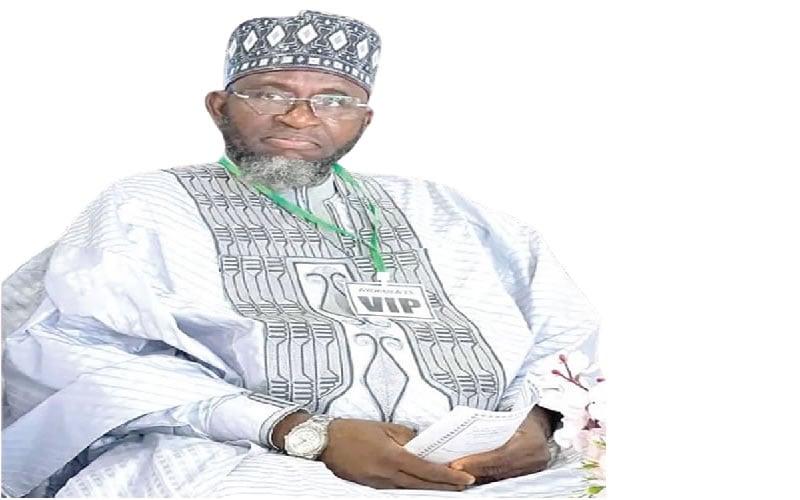
In a detailed explanation, the cleric emphasized that Islam is not the driving force behind the killings taking place in the northern region and warned Nigerians against mislabelling political or criminal violence as religious war.
No Real Muslim Is Permitted to Harm Christians or Anyone Else — Scholar Clarifies
Addressing repeated reports alleging that “Muslims are killing Christians in the North,” Sheikh Eleha said the narrative is completely false and misleading. According to him, Islam strictly forbids violence against people of other faiths, except in situations of active war — and even then, only under state authority.
He stressed that the Qur’an openly commands Muslims to show kindness, fairness, and goodwill to people who do not attack or oppress them. The scripture makes no distinction based on tribe, race, or religion when instructing Muslims to be compassionate and just.
The scholar explained that even Muslim leaders, such as northern governors, would be violating Islamic principles if they mistreat a single Christian citizen under their jurisdiction.
Islam, he noted, has a long history of peaceful coexistence. The Prophet Muhammad (SAW) lived among Jews and people of different beliefs, treating everyone with fairness. Angel Jibril consistently emphasized good treatment of neighbours — not only Muslim neighbours, but all neighbours.
Extremists Using “Allahu Akbar” Are Not Muslims — They Are Criminals
Sheikh Eleha dismissed the belief that shouting “Allahu Akbar” while committing violence makes a person Muslim. He explained that early Islamic history identifies a group known as the Khawarij, individuals who outwardly claimed Islam yet carried out unjust killings. The Prophet himself warned that their future generations would appear to be Muslim but would actually be enemies of humanity.
The cleric stated clearly:
Islam does not give private individuals the authority to kill.
Even legitimate capital punishment is strictly carried out by the government.
Anyone who kills in the name of Islam is committing a crime and aligns with the Khawarij ideology, not Islamic teachings.
He insisted that terrorists caught by security agencies should face full legal consequences.
Islam Encourages Knowledge — Boko Haram’s Anti-Education Ideology is Ignorance
On Boko Haram’s rejection of Western education, Sheikh Eleha stated that their ideology is fundamentally anti-Islamic. Islam is the only religion where God instructs the Prophet to seek knowledge above all else.
He referenced historical moments where the Prophet encouraged literacy and learning:
After the Battle of Badr, prisoners gained freedom by teaching Muslims how to read and write.
The Prophet funded followers to learn foreign languages so they could interpret letters from other nations.
Islam, he emphasized, never limits knowledge to only religious knowledge. Western education is part of the worldly knowledge Muslims are encouraged to acquire. The idea that Western education is forbidden (“Boko Haram”) is a product of ignorance, not religion.
ISIS, ISWAP, Al-Qaeda and Boko Haram Do Not Represent Islam
The scholar warned against grouping every violent movement under “Islamic extremism.” He explained that:
ISIS fights for territorial control in the Middle East — not Islam.
Al-Qaeda was originally created to fight Russia in Afghanistan, supported by various countries including the U.S.
Boko Haram began as a fringe sect with distorted teachings, living in isolation for decades.
He added that Boko Haram was later brought into political circles in northern Nigeria, and politicians played a role in empowering the group for election purposes. The breakdown of that political alliance led to the violent escalation Nigerians now attribute to religion.
He emphasized:
Nigeria’s insecurity is political, not religious.
Shockingly, he revealed that even Christians have been arrested among Boko Haram fighters, showing that the group has been hijacked by various criminal and political elements over time.
Banditry Is Not Islamic — Most Victims Are Muslims Themselves
On banditry, the scholar described it as a completely separate criminal phenomenon. He highlighted that:
Many victims of bandit attacks are Muslims
Fulani herders have historically lived peacefully
Criminal elements (including Bororo groups) are being wrongly grouped under “Muslims”
He cited killings of Muslim clerics like Alfa Albani and Mallam Jafar as evidence that extremists are not targeting only Christians. He criticized foreign figures like Donald Trump who claimed “Christian genocide,” saying such statements are based on misinformation.
He added that kidnappers do not discriminate — they abduct Christians, Muslims, traditional rulers, and ordinary civilians.
The Hidden Sponsors: Bandits Are Working for Powerful Individuals
Sheikh Eleha stated firmly that the real masterminds behind banditry are not the gunmen in the bush but powerful individuals living comfortably in major cities. He questioned:
What would a bandit in the forest do with ₦50 million ransom?
Why are bandits concentrated in areas rich in mineral deposits?
Why do they avoid riverine regions?
He explained that the weapons, logistics, money flow, and political cover indicate sponsorship from high-level actors benefiting from instability.
The Path to Peace: Go After Sponsors, Use Strong Sermons, and Consider Amnesty
According to him, the government has more than enough capacity to end insecurity if it targets the sponsors behind these criminal networks.
He recommended three key solutions:
1. Identify and prosecute the sponsors
Removing their financial and political support structures will cripple the gangs.
2. Allow both Muslim and Christian clerics to intensify moral teachings
He believes sermons soften hearts and discourage youths from joining violent groups.
3. A structured amnesty program
He referenced the successful Saudi Arabian approach, where former extremists were rehabilitated through welfare, housing, and reintegration support. Many surrendered, leading to long-term peace.
However, he warned that amnesty alone will fail if sponsors remain active.
Muslims and Christians Are Not Fighting — Nigerian Unity Exists at the Grassroots
Addressing claims that Christians and Muslims cannot live together in the North, he maintained that the narrative is exaggerated and politically motivated.
He pointed out:
The Sultan of Sokoto presides over a city full of churches.
Bishop Kukah lives peacefully in Sokoto.
Christians attend church in Kaduna, Kano, Kwara and other places without attacks.
For decades, Christian women in Kano have worn hijab as clothing without being harmed.
Muslims are also victims of banditry and terrorism.
He concluded that genuine Nigerians — both Muslims and Christians — want a peaceful nation and condemn the ongoing killings.
Final Message: Nigeria’s Crisis Is Political, Not Religious
Sheikh Eleha stressed that what Nigerians are witnessing is not Islam vs Christianity, but a web of political manipulation, resource struggles, and criminal networks.
He urged Nigerians to reject divisive narratives:
“We all suffer when the country suffers. This is about humanity, not religion.”