


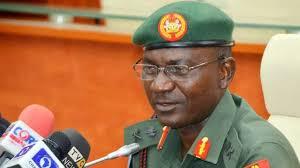
A former Coordinator of Defence Media Operations, Major General John Enenche (retd.), has opposed calls for the removal of Nigeria’s service chiefs amid ongoing security concerns, arguing that replacing military leadership would not provide a sustainable solution to the country's complex security challenges.
Enenche made the remarks against the backdrop of increasing public debate over the effectiveness of Nigeria's security architecture as the nation continues to confront threats ranging from terrorism and banditry to kidnapping, communal violence, and other forms of criminal activity.
According to the retired military officer, while public frustration over insecurity is understandable, lasting solutions require deeper structural, operational, and strategic reforms rather than focusing solely on leadership changes within the armed forces.
The former military spokesperson reportedly responded to growing calls from some stakeholders and members of the public advocating the replacement of Nigeria's service chiefs as a way to improve security outcomes.
Enenche maintained that changing military commanders without addressing the broader issues driving insecurity could amount to a temporary measure that fails to resolve underlying problems.
He emphasized that security challenges are often multifaceted and require coordinated efforts involving intelligence gathering, logistics, inter-agency cooperation, community engagement, political will, and sustained operational planning.
His comments have added another perspective to an ongoing national conversation about how best to strengthen Nigeria's response to security threats.
Nigeria's Security Challenges
Nigeria has faced persistent security challenges for more than a decade, with various regions experiencing different forms of violence and criminal activity.
Among the major security concerns are:
- Terrorism and insurgency in parts of the North-East
- Banditry in several North-West states
- Kidnapping for ransom across multiple regions
- Farmer-herder conflicts
- Communal clashes
- Armed robbery and organized crime
- Separatist-related tensions in some areas
These challenges have resulted in loss of lives, displacement of communities, economic disruption, and increased pressure on security agencies.
Successive administrations have introduced various security measures, including military operations, intelligence-led interventions, community policing initiatives, and investments in defense capabilities.
Despite these efforts, security remains one of the most pressing concerns for many Nigerians.
Why Service Chiefs Often Face Scrutiny
In times of heightened insecurity, public attention frequently turns to the nation's military and security leadership.
Service chiefs play critical roles in planning and executing military operations, managing personnel, coordinating defense strategies, and advising government authorities on security matters.
As a result, calls for their replacement often emerge when security incidents persist or escalate.
However, defense analysts note that security outcomes are influenced by numerous factors beyond military leadership alone.
These include:
- Intelligence capabilities
- Availability of equipment and technology
- Funding and logistics
- Border security
- Judicial processes
- Socio-economic conditions
- Community cooperation
- Regional and international partnerships
Experts argue that while leadership is important, long-term success depends on the effectiveness of the broader security ecosystem.
Enenche's Perspective
According to Enenche, removing service chiefs without addressing structural and operational challenges may not produce the desired results.
He reportedly emphasized the need for continuity in military planning and cautioned against assuming that leadership changes automatically translate into improved security conditions.
The retired general suggested that attention should also focus on strengthening institutions, improving intelligence operations, enhancing coordination among security agencies, and ensuring adequate support for personnel engaged in security operations.
His position reflects a view shared by some defense experts who argue that sustainable security improvements require systemic reforms rather than personnel changes alone.
Reactions from Security Analysts
Enenche's comments have generated mixed reactions among security observers and policy analysts.
Supporters of His View
Some defense experts agree that insecurity cannot be solved simply through leadership changes.
They argue that security threats evolve over time and require long-term strategic planning, investment in technology, improved intelligence capabilities, and stronger collaboration among agencies.
According to this school of thought, replacing service chiefs without addressing underlying issues could lead to disruption in ongoing operations.
Advocates for Leadership Changes
Others maintain that leadership accountability remains an important aspect of effective governance.
They argue that when security objectives are not being achieved, reviewing leadership structures can help introduce fresh ideas, new operational approaches, and renewed momentum.
These analysts believe that leadership changes and institutional reforms are not mutually exclusive and can occur simultaneously.
Impact on National Security Debate
The remarks by Enenche are likely to contribute to broader discussions on how Nigeria can improve its security framework.
Security remains a major issue influencing public confidence, economic activity, investment decisions, and national development.
Stakeholders continue to debate the most effective approaches to addressing insecurity, with proposals ranging from increased military funding and intelligence reforms to community-based security initiatives and technological modernization.
The discussion also highlights the importance of balancing immediate operational needs with long-term institutional development.
Beyond Leadership Changes
Security experts increasingly emphasize the need for comprehensive strategies that address both symptoms and root causes of insecurity.
Recommended approaches often include:
Enhanced Intelligence Gathering
Improving surveillance, intelligence sharing, and early warning systems can help prevent attacks and disrupt criminal networks.
Better Equipment and Logistics
Modern security challenges require advanced technology, mobility, communication systems, and operational support.
Community Participation
Local communities often provide critical information that can assist security agencies in identifying threats.
Socio-Economic Development
Addressing poverty, unemployment, and social exclusion can help reduce conditions that contribute to insecurity.
Stronger Inter-Agency Cooperation
Closer collaboration among military, police, intelligence services, and other institutions can improve operational effectiveness.
As security concerns continue to dominate national discourse, debates over leadership, policy direction, and institutional reforms are likely to remain active.
Government authorities are expected to continue evaluating security strategies while military and law enforcement agencies maintain ongoing operations across affected regions.
Meanwhile, experts stress that achieving lasting security will require a combination of effective leadership, institutional capacity, intelligence-driven operations, public cooperation, and sustained political commitment.
For many observers, the central question is not merely who occupies leadership positions but whether the overall security system is equipped to respond effectively to evolving threats.
As Nigeria continues its efforts to address insecurity, Enenche's remarks serve as a reminder that lasting solutions may depend on comprehensive reforms rather than changes in personnel alone.