


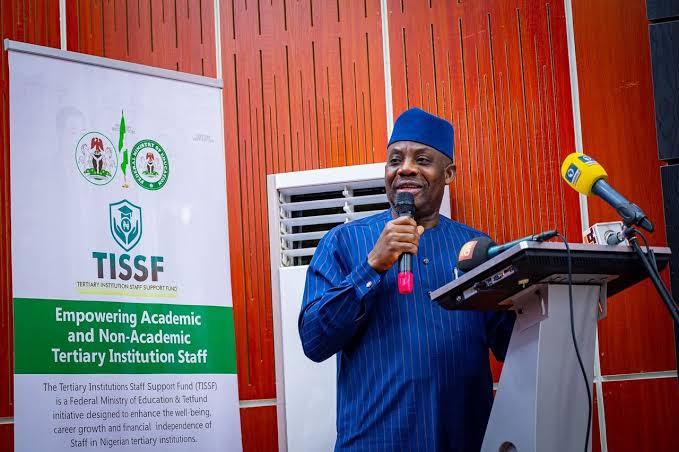
The Federal Government has introduced new regulations governing the award of honorary doctorate degrees in Nigerian universities, a development expected to reshape how institutions recognize distinguished individuals for contributions to society, education, public service, business, science, and other fields.
The policy, approved through the relevant education authorities, seeks to address growing concerns over the proliferation of honorary degrees and allegations that some awards have been granted without adequate scrutiny or adherence to academic standards.
Education stakeholders say the reforms could help preserve the prestige of honorary doctorate awards and reinforce the credibility of Nigeria's higher education system.
The newly approved guidelines establish clearer procedures and eligibility requirements for the conferment of honorary doctorate degrees by universities across the country.
According to officials, the reforms are intended to ensure that honorary awards remain reserved for individuals who have demonstrated exceptional achievements, outstanding leadership, significant societal contributions, or distinguished service to humanity.
The guidelines are also expected to promote greater transparency and accountability in the selection process.
Authorities believe the new framework will discourage practices that have attracted criticism from academics, education experts, and members of the public in recent years.
Growing Concerns Over Honorary Degrees
Honorary doctorate degrees are traditionally awarded by universities to recognize individuals who have made remarkable contributions to society, even when they have not completed the formal academic requirements associated with a doctoral degree.
Globally, honorary degrees are often conferred on:
- Distinguished scholars.
- Scientists and innovators.
- Philanthropists.
- Political leaders.
- Entrepreneurs.
- Artists and cultural icons.
- Humanitarian advocates.
However, concerns have emerged in Nigeria and other countries regarding the increasing frequency of honorary awards and questions about the criteria used in selecting recipients.
Critics have argued that the value of honorary degrees can be diminished when awards appear to be driven by publicity, political considerations, or financial influence rather than genuine merit.
These concerns have fueled calls for stronger regulation and oversight.
Key Objectives of the New Guidelines
The Federal Government says the regulations are designed to achieve several objectives.
Protect Academic Integrity
Authorities aim to preserve the credibility and prestige associated with honorary doctorate awards.
Promote Transparency
Universities are expected to follow clearly defined procedures when identifying and approving candidates.
Ensure Merit-Based Recognition
The guidelines emphasize that recipients should possess demonstrable records of achievement and public impact.
Strengthen Institutional Accountability
Higher institutions will be required to maintain standards that align with national educational policies and international best practices.
Prevent Abuse
The new framework seeks to discourage practices that could undermine public trust in academic institutions.
Why Honorary Degrees Matter
Honorary doctorates are among the highest forms of recognition awarded by universities.
They serve multiple purposes, including:
- Celebrating exceptional achievements.
- Encouraging public service and innovation.
- Strengthening relationships between universities and society.
- Highlighting role models for students and researchers.
Education experts note that the value of such awards depends largely on the integrity of the selection process.
When conferred appropriately, honorary degrees can inspire future generations and reinforce the importance of excellence across different sectors.
Reactions from Academic Stakeholders
The approval of the new guidelines has generated discussion within Nigeria's academic community.
Many education professionals have welcomed the move, arguing that it could help restore confidence in honorary doctorate awards.
Some university administrators believe clearer regulations will assist institutions in maintaining consistency and avoiding controversies associated with recipient selection.
Academic analysts have also emphasized the need for universities to implement the guidelines faithfully to ensure that the intended reforms achieve lasting impact.
Others have called for periodic reviews of the policy to keep pace with evolving educational standards and societal expectations.
Impact on Nigerian Universities
The new rules are expected to influence how universities evaluate prospective honorary degree recipients.
Institutions may be required to strengthen internal review mechanisms and ensure that nomination processes undergo rigorous scrutiny before approval.
Observers believe the reforms could lead to:
- Higher standards for recipients.
- Greater public confidence in honorary awards.
- Improved institutional credibility.
- Reduced controversy surrounding honorary degrees.
- Stronger alignment with international academic practices.
The changes may also encourage universities to place greater emphasis on measurable achievements and societal impact when considering candidates.
The Global Perspective
Around the world, leading universities maintain strict procedures for awarding honorary degrees.
Many institutions require extensive vetting processes, committee reviews, and approval by governing councils before honors are conferred.
Education experts say Nigeria's new guidelines reflect broader global efforts to protect academic excellence and preserve the significance of honorary recognitions.
They note that maintaining rigorous standards is essential if honorary awards are to retain their symbolic and institutional value.
With the approval of the new guidelines, universities across Nigeria are expected to review their existing procedures and align them with the updated regulatory framework.
Education authorities will likely monitor implementation to ensure compliance and evaluate the effectiveness of the reforms over time.
For many stakeholders, the success of the initiative will ultimately depend on how consistently institutions apply the new standards and uphold the principles of merit, transparency, and academic integrity.
As Nigeria's higher education sector continues to evolve, the reforms represent a significant step toward strengthening public confidence in honorary doctorate awards and preserving their status as prestigious academic honors.