


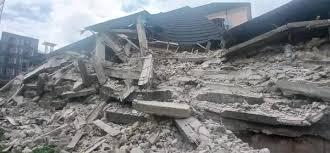
Residents of Ikenga, Ogidi, in Idemili North Local Government Area of Anambra State, were thrown into shock after a one-storey commercial building containing eight shops collapsed following sustained rainfall in the area.
The incident, which occurred after days of heavy downpour, has renewed concerns about the structural integrity of buildings and the increasing vulnerability of infrastructure to harsh weather conditions across Nigeria.
Emergency responders, local authorities, and concerned residents reportedly rushed to the scene shortly after the collapse to assess the situation and determine whether there were any casualties. As of the time of filing this report, investigations are ongoing to establish the exact cause of the structural failure.
The collapse has sparked calls for stricter enforcement of building regulations and regular structural assessments, particularly in areas prone to flooding and heavy rainfall.
According to eyewitness accounts, the building suddenly gave way after prolonged rainfall soaked the surrounding environment and foundation areas. Residents in the vicinity reported hearing a loud crashing sound before discovering that the structure had collapsed.
The building, which accommodated eight commercial shops, served as a source of livelihood for several traders and business owners in the community. Goods, equipment, and other valuable property were reportedly trapped beneath the rubble, raising concerns about the financial losses suffered by affected occupants.
Authorities have yet to provide a comprehensive assessment of the extent of the damage. However, preliminary findings suggest that persistent rainfall may have contributed significantly to weakening the structure.
Officials are expected to conduct technical evaluations, including soil and structural integrity assessments, to determine whether poor construction practices, inadequate drainage systems, substandard building materials, or environmental factors played a role in the collapse.
Rising Cases of Building Collapse in Nigeria
Building collapse remains a recurring challenge in several parts of Nigeria, particularly in rapidly growing urban and semi-urban communities where construction activities often outpace regulatory oversight.
Over the past decade, numerous incidents have been recorded across different states, resulting in loss of lives, injuries, and significant economic losses.
Experts have identified several factors responsible for such disasters, including:
- Use of substandard construction materials
- Structural defects and poor engineering practices
- Failure to obtain necessary approvals
- Inadequate supervision during construction
- Weak foundations
- Poor drainage systems
- Environmental degradation and erosion
- Extreme weather conditions
The increasing frequency of intense rainfall linked to climate change has also placed additional pressure on aging and poorly maintained structures across the country.
In many communities, prolonged flooding and waterlogging weaken foundations, causing cracks and compromising structural stability.
Impact on Local Businesses and Residents
The collapse has left affected shop owners counting their losses as they grapple with the destruction of their businesses.
For many small and medium-scale traders, commercial spaces represent years of investment and hard work. The sudden loss of shops, merchandise, and business infrastructure could have significant economic consequences for affected families.
Residents have also expressed concerns about safety in the area, especially for neighboring buildings that may have been exposed to similar environmental conditions.
Some community members are calling on authorities to inspect nearby structures to prevent further incidents.
Infrastructure experts warn that when one building collapses due to environmental or structural weaknesses, surrounding properties may face similar risks if preventive measures are not taken promptly.
The Role of Rainfall and Infrastructure Resilience
Urban planning and construction experts note that heavy rainfall alone does not typically cause a properly designed building to collapse.
According to industry professionals, prolonged rainfall can expose underlying weaknesses in a structure, including poor foundation work, inadequate reinforcement, soil instability, and drainage failures.
Water infiltration can erode supporting soil beneath foundations, create excessive pressure on walls, and accelerate deterioration of construction materials.
Experts stress that regular maintenance and compliance with approved building standards remain critical in reducing the risk of collapse.
They also emphasize the importance of climate-resilient infrastructure as Nigeria experiences increasingly unpredictable weather patterns.
Residents of Ogidi have expressed sadness and concern over the incident, describing it as a wake-up call for both property owners and regulatory agencies.
Many have urged government authorities to intensify monitoring of construction projects and enforce existing building regulations.
Community leaders have also called for support for affected traders who may struggle to recover from the losses incurred as a result of the collapse.
Meanwhile, safety advocates are encouraging citizens to report visible cracks, structural defects, and signs of building distress before they escalate into major disasters.
Government Response and Investigation
Relevant authorities in Anambra State have commenced investigations to determine the immediate and underlying causes of the collapse.
Officials are expected to examine:
- Structural design and approval records
- Construction materials used
- Foundation integrity
- Drainage systems around the building
- Compliance with state building regulations
- Environmental conditions preceding the incident
The outcome of the investigation could provide critical insights into preventing similar occurrences in the future.
Government agencies may also use the findings to strengthen building inspection processes and improve enforcement mechanisms across the state.
Climate Change and Growing Infrastructure Challenges
The incident comes at a time when many Nigerian states are experiencing increased rainfall intensity and flooding events.
Environmental experts have repeatedly warned that changing weather patterns are creating new risks for buildings, roads, bridges, and other critical infrastructure.
As urban populations continue to grow, the need for sustainable planning, resilient construction methods, and effective drainage systems has become increasingly important.
Communities vulnerable to erosion, flooding, and soil instability face heightened risks if infrastructure development does not adequately account for environmental realities.
Authorities are expected to release the findings of their investigation once structural assessments and technical evaluations are completed.
The results will likely determine whether the collapse was caused primarily by environmental factors, construction deficiencies, regulatory failures, or a combination of multiple issues.
Affected business owners may also seek compensation or assistance depending on the outcome of official investigations and insurance arrangements, where applicable.
For now, residents and traders in Ogidi await answers as emergency assessments continue and authorities work to prevent similar incidents elsewhere in Anambra State.
The collapse serves as another reminder of the urgent need for stronger building safety standards, regular inspections, and climate-resilient infrastructure to safeguard lives and property across Nigeria.