


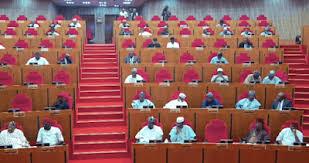
The Nigerian Senate has stepped down the Chartered Institute of Training and Development of Nigeria (Establishment) Bill, 2026, amid concerns that the proposed institute may duplicate the functions of already existing professional and regulatory organizations.
The decision followed deliberations by lawmakers who expressed reservations about the necessity of creating another statutory body whose responsibilities could potentially overlap with those of institutions already operating within Nigeria’s education, training, and professional development sectors.
The development reflects growing concerns within the National Assembly about the proliferation of government agencies and professional bodies with similar mandates, a situation experts say can lead to inefficiencies, increased administrative costs, and regulatory conflicts.
Why the Senate Stepped Down the Bill
During legislative consideration of the proposed bill, senators reportedly questioned whether the establishment of the Chartered Institute of Training and Development of Nigeria would create unnecessary duplication within the country's professional development framework.
Lawmakers argued that before creating a new institution, there must be clear evidence that existing organizations are unable to adequately perform the proposed functions.
Concerns were also raised regarding the potential for overlapping responsibilities with agencies and professional bodies involved in workforce development, human resource management, vocational education, capacity building, and professional certification.
As a result, the Senate resolved to suspend further consideration of the bill pending additional review and clarification.
Understanding the Proposed Bill
The Chartered Institute of Training and Development of Nigeria (Establishment) Bill, 2026, seeks to create a professional body responsible for regulating and promoting standards in training, learning, workforce development, and professional capacity building.
Supporters of the proposal argue that a dedicated institute could:
- Standardize training and development practices.
- Promote professional excellence.
- Enhance workforce productivity.
- Improve certification standards.
- Support human capital development initiatives.
Advocates believe such an institution could contribute to strengthening Nigeria’s workforce competitiveness in an increasingly knowledge-driven global economy.
However, critics maintain that similar objectives are already being pursued by existing organizations.
Concerns About Regulatory Duplication
One of the central issues raised during Senate deliberations was the possibility of regulatory duplication.
Policy experts frequently caution against creating multiple institutions with overlapping mandates because doing so can result in:
Administrative Inefficiencies
Similar agencies may compete for resources while performing nearly identical functions.
Regulatory Conflicts
Overlapping responsibilities can create uncertainty for professionals and organizations seeking compliance.
Increased Public Expenditure
Establishing new institutions often requires significant government funding for infrastructure, personnel, and administration.
Bureaucratic Expansion
Additional agencies can increase bureaucracy without necessarily improving service delivery.
Senators reportedly emphasized the need for careful evaluation to ensure that any new institution fills a genuine gap rather than replicating existing structures.
Nigeria's Efforts to Rationalize Government Agencies
The debate surrounding the proposed institute comes amid longstanding discussions about the size and efficiency of Nigeria's public sector.
Over the years, various committees and policy experts have recommended reducing duplication among government agencies and professional bodies to improve governance and reduce costs.
One recurring concern has been the existence of institutions with similar mandates operating simultaneously, sometimes leading to jurisdictional disputes and inefficiencies.
Successive administrations have explored reforms aimed at streamlining government operations, improving coordination, and enhancing service delivery.
The Senate's decision reflects these broader concerns about institutional effectiveness and public sector reform.
Human Capital Development and National Growth
Despite concerns about duplication, lawmakers and experts generally agree on the importance of strengthening training and professional development in Nigeria.
Human capital development remains a critical component of national economic growth and competitiveness.
Experts note that investment in workforce training contributes to:
Improved Productivity
Well-trained employees are often more efficient and innovative.
Economic Competitiveness
A skilled workforce helps attract investment and supports industrial development.
Employment Opportunities
Professional development programs can enhance employability and career advancement.
Technological Adaptation
Continuous learning helps workers adapt to changing technological environments.
The debate therefore centers less on the value of training and more on the most effective institutional framework for delivering it.
Stakeholder Reactions
The Senate's decision has generated mixed reactions among stakeholders.
Some governance experts welcomed the move, arguing that lawmakers were right to carefully examine the implications of establishing another statutory body.
Others expressed disappointment, contending that the proposed institute could help improve standards within Nigeria's training and development sector.
Professional associations and industry stakeholders are expected to continue engaging lawmakers as discussions on the bill evolve.
Many observers believe further consultations may help clarify whether existing institutions can adequately address the needs identified by proponents of the legislation.
Implications for Professional Development Sector
The suspension of the bill could influence future discussions about professional regulation and workforce development in Nigeria.
Key issues likely to remain under consideration include:
- Professional certification standards.
- Capacity-building frameworks.
- Workforce development policies.
- Coordination among regulatory bodies.
- Institutional efficiency and accountability.
Analysts suggest that policymakers must strike a balance between promoting professional excellence and avoiding unnecessary institutional expansion.
Legislative Oversight and Policy Evaluation
The Senate's action highlights the role of legislative scrutiny in evaluating proposed laws and institutions.
Before approving new agencies or statutory bodies, lawmakers are expected to assess:
- Necessity and relevance.
- Financial implications.
- Compatibility with existing laws.
- Potential duplication of functions.
- Long-term sustainability.
Governance experts argue that such evaluations are essential for ensuring efficient use of public resources and effective public administration.
The Senate's decision, stakeholders may be required to provide additional information and justification for the proposed institute.
Lawmakers could request further consultations, expert opinions, or committee reviews before reconsidering the bill.
If concerns regarding duplication are adequately addressed, the legislation may return for further debate at a later stage.
However, any future progress will likely depend on demonstrating that the proposed institute offers unique value that cannot be effectively delivered by existing institutions.
The Nigerian Senate's decision to step down the Chartered Institute of Training and Development of Nigeria (Establishment) Bill, 2026, reflects growing concern about the duplication of institutional responsibilities within the country's professional and regulatory landscape.
While lawmakers recognize the importance of workforce development and professional training, they insist that new institutions must be carefully justified to avoid unnecessary bureaucracy and inefficient use of public resources. As discussions continue, stakeholders will be watching closely to see whether the bill can be revised in a manner that addresses concerns while advancing Nigeria's human capital development goals.