


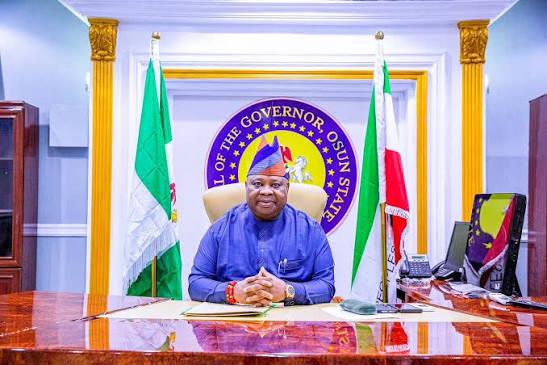
Osun State Governor Ademola Adeleke has criticized the Federal High Court judgment ordering the deregistration of the Accord Party and other political parties, arguing that the decision was delivered despite an existing Court of Appeal order. The development has sparked fresh legal and political debates over party registration, judicial hierarchy, and Nigeria's democratic process ahead of future elections.
A fresh legal and political controversy has emerged following the Federal High Court's decision ordering the deregistration of the Accord Party and four other political parties in Nigeria.
Osun State Governor Ademola Adeleke has condemned the judgment, insisting that it violated a subsisting order of the Court of Appeal which had reportedly halted proceedings in the matter pending further judicial determination.
The ruling has generated widespread reactions across political circles, legal communities, and civil society organizations, with many observers raising questions about the implications for Nigeria's multi-party democracy and the constitutional powers of courts handling electoral disputes.
The case comes at a critical period as political parties across the country continue preparations for future elections.
The Federal High Court sitting in Abuja ordered the Independent National Electoral Commission (INEC) to deregister five political parties, including the Accord Party, African Democratic Congress (ADC), Action Alliance (AA), Action Peoples Party (APP), and Zenith Labour Party (ZLP). The court held that the affected parties failed to satisfy constitutional requirements relating to electoral performance. ([Law and Society Magazine.][1])
Justice Peter Lifu, who presided over the case, directed INEC to remove the parties from its register and further ordered that they should not participate in subsequent elections, including future general elections. ([Peoples Gazette Nigeria][2])
The suit was filed by the Incorporated Trustees of the National Forum of Former Legislators, which argued that the affected parties failed to meet the constitutional threshold required for continued registration. ([Law and Society Magazine.][1])
According to the plaintiffs, political parties are expected to demonstrate a certain level of electoral relevance and performance under Nigeria's constitutional framework. ([Peoples Gazette Nigeria][2])
Adeleke's Objection
Governor Ademola Adeleke strongly disagreed with the judgment, arguing that the Federal High Court ought not to have proceeded with the matter because there was already a subsisting Court of Appeal order concerning the case.
The governor's position is based on earlier developments in which the Court of Appeal reportedly granted a stay of proceedings affecting the deregistration case involving the Accord Party and other political organizations. ([GlobalSentinel][3])
Supporters of Adeleke's position argue that once a higher court issues an order staying proceedings, lower courts are generally expected to suspend further action until the appellate court resolves the issues before it.
The governor's criticism has therefore centered on the principle of judicial hierarchy and respect for appellate court directives.
Legal analysts note that whether the Federal High Court acted within its powers may ultimately become a subject for further judicial interpretation and possible appeals.
Background to the Legal Battle
The dispute did not begin with the recent judgment.
Several months ago, the Incorporated Trustees of the National Forum of Former Legislators instituted a suit seeking the deregistration of a number of political parties over alleged constitutional breaches. ([Guardian Nigeria][4])
The plaintiffs argued that some parties had failed to meet constitutional standards relating to electoral spread and performance, making them liable for deregistration. ([Guardian Nigeria][4])
The case attracted national attention because it targeted parties that, while not among Nigeria's largest political organizations, remain active participants in the country's democratic process.
During proceedings, several applications for joinder and requests for stay of proceedings were filed. Among those linked to applications in the matter was Governor Adeleke. However, the Federal High Court dismissed some of those applications, maintaining that the substantive suit should continue. ([Guardian Nigeria][5])
In a significant twist, the Court of Appeal later granted an order that reportedly halted further proceedings, leading to the postponement of an earlier scheduled judgment. ([GlobalSentinel][3])
This development created expectations that the Federal High Court would await the outcome of appellate proceedings before delivering any final decision.
The eventual judgment has therefore reignited controversy over the interpretation and effect of the appellate court's intervention.
Political Party Deregistration in Nigeria
Political party deregistration remains one of the most contentious issues in Nigeria's electoral system.
Over the years, INEC has periodically reviewed the status of registered political parties, particularly those that fail to demonstrate electoral viability.
Supporters of deregistration policies argue that Nigeria's ballot papers have historically been crowded with numerous political parties, many of which lack significant grassroots structures or electoral influence.
They contend that reducing the number of inactive parties can simplify elections, lower administrative costs, and improve voter understanding.
Critics, however, warn that excessive deregistration could undermine democratic pluralism and restrict political participation.
They argue that emerging parties often require time to develop national structures and gain electoral acceptance.
The debate reflects a broader tension between administrative efficiency and democratic inclusiveness.
Legal Questions Raised by the Judgment
The latest ruling raises several important legal questions.
. Can a Federal High Court Proceed Despite an Appeal Court Order?
One of the central issues is whether the Federal High Court's judgment was consistent with the Court of Appeal's earlier directive.
If appellate courts have indeed ordered a stay of proceedings, legal experts suggest that any subsequent action by a lower court may face scrutiny during appeal proceedings. ([GlobalSentinel][3])
### 2. What Are the Constitutional Requirements for Political Parties?
Another issue concerns the interpretation of constitutional provisions governing political party existence and electoral performance.
The plaintiffs argued that the affected parties failed to satisfy required thresholds. ([Peoples Gazette Nigeria][2])
However, the affected parties may seek appellate review of both the legal interpretation and factual basis of the judgment.
### 3. What Happens to Party Members and Candidates?
If the judgment eventually stands, party members, elected officials, and prospective candidates could face significant political uncertainty.
The situation could affect future electoral calculations and party alliances nationwide.
Political Reactions
The ruling has triggered mixed reactions among political stakeholders.
Supporters of the judgment insist that political parties must comply with constitutional standards and demonstrate meaningful electoral performance to justify continued registration.
Others argue that the decision may have far-reaching consequences for opposition politics and democratic competition.
Some political observers have expressed concern that removing multiple parties from the electoral landscape could reduce political diversity, while others believe it could strengthen the party system by encouraging mergers and coalition-building.
The affected parties are widely expected to challenge the judgment through available legal channels. ([Reuters][6])
Impact on Nigeria's Democracy
Nigeria operates a multi-party democratic system that allows citizens to associate politically and seek elective office through registered political organizations.
The deregistration of political parties has implications beyond the affected organizations themselves.
The judgment could influence:
* Political realignments ahead of future elections.
* Coalition negotiations among opposition groups.
* Candidate selection processes.
* Voter representation and political participation.
* The interpretation of electoral laws and constitutional provisions.
Analysts believe the outcome of any subsequent appeals could establish important legal precedents for future disputes involving political party registration and deregistration.
The legal battle is unlikely to end with the Federal High Court judgment.
Affected political parties are expected to pursue appellate remedies and seek judicial clarification regarding the validity of the deregistration order. ([Reuters][6])
The Court of Appeal may eventually be called upon to determine whether the Federal High Court's decision was consistent with existing appellate orders and constitutional requirements.
INEC's next steps will also be closely watched, as the electoral commission will need to navigate both the judgment and any pending appeals.
Until the appellate process is exhausted, the future status of the affected political parties may remain a subject of legal and political debate.
The controversy underscores a recurring challenge within Nigeria's democracy: balancing constitutional compliance with the need for broad political participation.
While electoral reforms often seek to improve efficiency and accountability, they must also preserve citizens' rights to political association and representation.
For many observers, the ultimate significance of this case lies not only in the fate of the affected parties but also in the judicial principles that will emerge from the appeals process.
The eventual outcome could shape Nigeria's political landscape for years to come.
Governor Ademola Adeleke's criticism of the Federal High Court judgment has added a new dimension to the debate surrounding the deregistration of political parties in Nigeria.
At the heart of the controversy is the question of whether a subsisting Court of Appeal order was respected and whether constitutional provisions governing political parties were properly applied.
As appeals and legal challenges continue, Nigerians will be watching closely to see how the courts resolve a dispute that could have lasting implications for the country's democratic development, electoral system, and political future.