


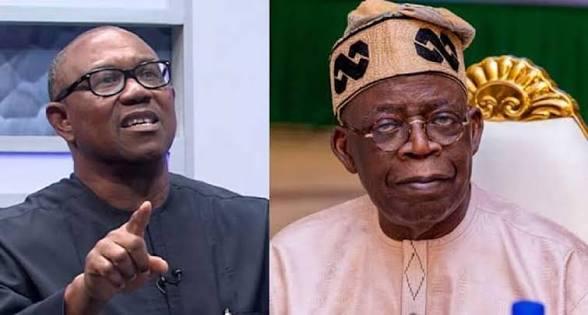
Former Anambra State Governor and presidential candidate, Peter Obi, has explained that his criticism of the Federal Government's fuel subsidy policy was not directed at the removal itself but at the process through which it was executed.
Speaking during an interview with Rufai Oseni, Obi stated that he had consistently supported the idea of ending fuel subsidies but believed the policy should have been implemented through a carefully coordinated and transparent process.
According to him, the removal of fuel subsidy was necessary, but the transition required adequate planning, stakeholder engagement, and measures to protect citizens from economic shocks.
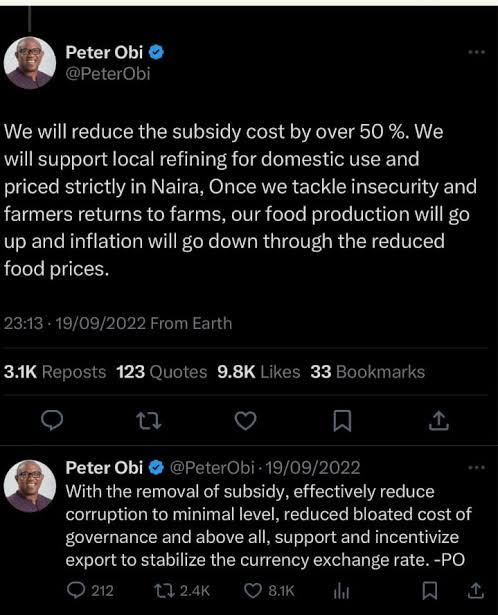
Obi explained that before implementing subsidy removal, he would have engaged key stakeholders within the petroleum industry to better understand the scale of spending and identify areas vulnerable to corruption and inefficiency.
He argued that concerns surrounding the subsidy regime had long been linked to allegations of fraud, leakages, and lack of transparency.
According to Obi, reforms should have included efforts to establish the actual cost of the subsidy programme while simultaneously addressing exchange rate issues and broader economic challenges.
The former governor emphasized that fighting corruption should remain central to any major economic reform programme.
Concerns Over Economic Impact
A key aspect of Obi's criticism focused on the impact of subsidy removal on ordinary Nigerians.
He questioned whether the expected benefits of the policy had translated into meaningful improvements in citizens' living conditions.
According to Obi, rising inflation, increased transportation costs, and the overall cost-of-living crisis have continued to place pressure on households across the country.
He also raised concerns about Nigeria's borrowing levels, arguing that government debt has continued to increase despite the elimination of subsidy payments.
Fuel Subsidy Removal in Nigeria
Fuel subsidy has remained one of Nigeria's most debated economic policies for decades.
Successive governments maintained the subsidy system to keep petrol prices artificially low for consumers.
Supporters argued that the policy provided relief to citizens by reducing transportation and energy costs.
Critics, however, maintained that the subsidy system was financially unsustainable and prone to abuse, corruption, and inefficiency.
Following the removal of the subsidy, fuel prices rose significantly, triggering wider economic effects across multiple sectors of the economy.
The Debate Over Implementation
Economic experts generally agree that subsidy reforms are often politically and socially sensitive.
Many analysts have argued that such reforms require:
Extensive stakeholder consultations.
Clear communication strategies.
Social protection measures.
Strong anti-corruption mechanisms.
Economic stabilization policies.
Obi's comments reflect a broader debate among policymakers and economists regarding not only whether reforms are necessary but also how they should be implemented.
Reactions from Political and Economic Observers
The remarks have generated discussions among economists, political analysts, and members of the public.
Supporters of Obi's position argue that economic reforms are more effective when accompanied by transparency, institutional reforms, and targeted support for vulnerable citizens.
Others maintain that subsidy removal was unavoidable due to fiscal pressures and that delaying implementation could have worsened economic challenges.
The debate continues to shape discussions about economic governance and policy direction in Nigeria.
Impact on National Economic Discourse
The issue of fuel subsidy remains central to conversations about Nigeria's economy.
Many Nigerians continue to evaluate government policies based on their effects on inflation, employment, purchasing power, and overall living standards.
Political observers note that economic management is likely to remain a major campaign issue as political actors position themselves ahead of future elections.
Discussions about subsidy removal, exchange rate reforms, public debt, and anti-corruption measures are expected to feature prominently in national debates.
As Nigeria continues to navigate economic reforms, policymakers will face increasing pressure to demonstrate tangible benefits from decisions such as subsidy removal.
Citizens, businesses, and investors are expected to closely monitor government efforts to stabilize prices, improve infrastructure, strengthen social support programmes, and stimulate economic growth.
For political leaders, the challenge remains balancing difficult reforms with measures that protect citizens from hardship.
Peter Obi's latest comments highlight the continuing debate over fuel subsidy removal and economic reform in Nigeria.
While supporting the principle of ending subsidies, Obi argues that the policy should have been implemented through a more structured and transparent process backed by anti-corruption measures and broader economic planning.
As Nigerians continue to assess the impact of subsidy removal on daily life, discussions about economic policy, governance, and accountability are likely to remain at the forefront of public discourse.