


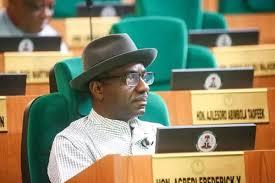
In a significant development within Nigeria’s legislative landscape, Frederick Agbedi, the lawmaker representing Sagbama/Ekeremor Federal Constituency of Bayelsa State, has emerged as the new Minority Leader of the House of Representatives of Nigeria.
The appointment places Agbedi in one of the most influential leadership positions within the National Assembly, where he will be responsible for coordinating opposition lawmakers, articulating alternative policy positions, and providing legislative scrutiny of government proposals.
His emergence comes at a crucial time as the House continues deliberations on key national issues, including security, economic reforms, constitutional amendments, and governance matters affecting millions of Nigerians.
Frederick Agbedi was named Minority Leader following consultations and decisions within the opposition bloc in the House of Representatives.
The Minority Leader serves as the principal spokesperson of opposition parties in the House and plays a critical role in shaping legislative debates, mobilizing lawmakers, and ensuring that alternative viewpoints are represented during parliamentary proceedings.
His emergence is expected to strengthen the voice of opposition lawmakers and influence the direction of legislative engagements in the coming months.
Political observers view the appointment as a strategic move aimed at enhancing coordination among minority parties within the Green Chamber.

Frederick Agbedi is a seasoned legislator and politician from Bayelsa State with years of experience in public service and parliamentary affairs.
Representing the Sagbama/Ekeremor Federal Constituency, Agbedi has been involved in legislative activities focused on governance, development, public accountability, and constituency representation.
Throughout his tenure in the House of Representatives, he has participated in debates and committee activities addressing national issues ranging from infrastructure development and education to economic growth and security.
His elevation to Minority Leader is seen as recognition of his experience and contributions within the legislature.
Understanding the Role of the Minority Leader
The office of the Minority Leader is one of the most important positions in parliamentary democracies.
The Minority Leader is tasked with:
Coordinating Opposition Lawmakers
The office helps unify lawmakers from opposition parties on major legislative issues.
Providing Alternative Policy Perspectives
The Minority Leader presents alternative viewpoints to government-backed bills and policies.
Legislative Oversight
The role involves scrutinizing executive actions and ensuring accountability within government institutions.
Managing Parliamentary Strategy
The office coordinates debate strategies, legislative priorities, and policy interventions on behalf of minority parties.
Representing Opposition Interests
The Minority Leader serves as the public face of opposition positions in the House.
Political analysts note that effective minority leadership contributes to democratic governance by ensuring diverse opinions are heard during legislative processes.
Political Significance of the Appointment
Agbedi’s emergence carries broader political implications beyond the National Assembly.
As Nigeria continues to navigate economic and security challenges, opposition parties are expected to play a critical role in shaping public discourse and policy debates.
Observers believe the new Minority Leader will be expected to:
- Strengthen opposition coordination
- Enhance legislative engagement
- Promote constructive debate
- Advance policy alternatives
- Protect democratic accountability
The appointment also highlights the continued influence of Bayelsa State lawmakers within national politics.
Reactions from Political Stakeholders
The announcement has generated reactions from lawmakers, political leaders, and observers across the country.
Support from Colleagues
Many lawmakers have congratulated Agbedi on his emergence, expressing confidence in his ability to effectively lead the opposition caucus.
Interest from Political Analysts
Political commentators have described the appointment as an important development that could shape future legislative dynamics.
Expectations from Constituents
Residents of Sagbama and Ekeremor are expected to view the appointment as an opportunity for greater visibility and influence for their constituency at the national level.
Challenges Ahead
Despite the significance of the role, Agbedi assumes office at a time when Nigeria faces several pressing national challenges.
Among the issues expected to dominate legislative discussions are:
Economic Reforms
Debates surrounding inflation, taxation, employment, and economic recovery are likely to remain prominent.
Security Concerns
Lawmakers continue to address issues relating to insurgency, kidnapping, banditry, and communal conflicts.
Constitutional Amendments
Several constitutional reform proposals, including discussions around state policing and governance reforms, are currently attracting national attention.
Electoral Reforms
Future debates on strengthening democratic institutions and electoral processes are also anticipated.
As Minority Leader, Agbedi will be expected to coordinate opposition responses to these and other critical national matters.
Impact on Legislative Activities
The emergence of a new Minority Leader could influence the tone and direction of debates within the House of Representatives.
Political observers note that strong opposition leadership often contributes to:
- More robust legislative scrutiny
- Improved policy debates
- Enhanced accountability mechanisms
- Greater representation of diverse viewpoints
- Stronger democratic institutions
The effectiveness of the Minority Leader will largely depend on his ability to build consensus among lawmakers while engaging constructively with the majority caucus.
With his emergence as Minority Leader, Frederick Agbedi is expected to immediately assume responsibilities associated with the office and participate in shaping the legislative agenda of the opposition bloc.
Attention will now focus on how he intends to coordinate lawmakers, respond to major government policies, and contribute to debates on national development.
As the House of Representatives continues to consider critical legislation affecting governance, security, and economic reforms, Agbedi’s leadership will be closely watched by political stakeholders across Nigeria.
His appointment marks a new chapter for the opposition caucus and could play a significant role in defining parliamentary engagements in the months ahead.