


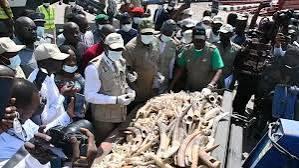
The Nigeria Customs Service and National Environmental Standards and Regulations Enforcement Agency have recorded a significant breakthrough in the fight against wildlife crime following the seizure of elephant tusks worth approximately ₦126.3 million.
The operation, carried out in Lagos and Ogun states, led to the arrest of four suspects allegedly linked to the illegal trade in wildlife products.
Officials described the seizure as a major step in efforts to dismantle trafficking networks involved in the illegal exploitation of endangered animal species.
Details of the Operation
According to authorities, intelligence gathering and inter-agency collaboration played a crucial role in the successful operation.
The suspects were reportedly apprehended during coordinated enforcement actions aimed at tracking and intercepting illegal wildlife products moving through the region.
Investigators recovered multiple elephant tusks believed to have originated from illegally hunted elephants.
The seized items have been taken into government custody as investigations continue.
Why Elephant Tusks Are Protected
Elephant tusks, commonly referred to as ivory, are among the most sought-after wildlife products in the illegal global wildlife trade.
Conservation experts warn that poaching driven by ivory demand has significantly reduced elephant populations across Africa over the years.
Illegal ivory trafficking contributes to:
- Wildlife population decline
- Biodiversity loss
- Organized criminal activities
- Environmental degradation
- Threats to conservation efforts
Many countries, including Nigeria, have enacted laws prohibiting unauthorized trade in elephant products.
Growing Concern Over Wildlife Crime
Wildlife trafficking remains one of the world's most profitable illegal trades, alongside drug trafficking, arms smuggling, and human trafficking.
Criminal networks often exploit weak enforcement systems and international demand for animal products to generate substantial profits.
Conservation organizations have repeatedly called for stronger border controls, tougher penalties, and greater public awareness to reduce wildlife crime.
Authorities say the latest seizure demonstrates increasing efforts to disrupt these criminal operations.
Customs and NESREA Collaboration
The successful operation highlights growing cooperation between Nigerian enforcement agencies.
Officials noted that collaboration between Customs, NESREA, security agencies, and environmental stakeholders is essential for detecting and preventing illegal wildlife activities.
Such partnerships enable authorities to:
- Share intelligence
- Conduct joint operations
- Track trafficking networks
- Strengthen border surveillance
- Improve prosecution efforts
The agencies pledged to continue working together to combat environmental crimes nationwide.
Legal Consequences for Suspects
The four arrested suspects are expected to face further investigation and possible prosecution under relevant environmental and wildlife protection laws.
If found guilty, offenders may face penalties that could include fines, imprisonment, or both, depending on applicable legal provisions.
Authorities emphasized that wildlife crimes are serious offences and warned traffickers that enforcement efforts would continue to intensify.
Impact on Conservation Efforts
Environmental experts have welcomed the seizure, describing it as an important contribution to wildlife conservation.
Protecting endangered species such as elephants is considered vital for maintaining ecological balance and preserving biodiversity for future generations.
Conservationists argue that reducing illegal wildlife trade requires not only law enforcement but also public education and international cooperation.
Nigeria's Role in Combating Illegal Wildlife Trade
Nigeria has increasingly strengthened efforts to address wildlife trafficking through:
- Enhanced border monitoring
- International cooperation
- Public awareness campaigns
- Improved enforcement measures
- Environmental protection initiatives
Authorities say continued vigilance is necessary to prevent the country from being used as a transit route for illegal wildlife products.
Investigations into the seized elephant tusks are ongoing, with authorities working to determine the full extent of the trafficking network involved.
Law enforcement agencies are expected to pursue additional leads that may result in further arrests and seizures.
The operation serves as a reminder of the importance of protecting endangered species and holding wildlife traffickers accountable.