


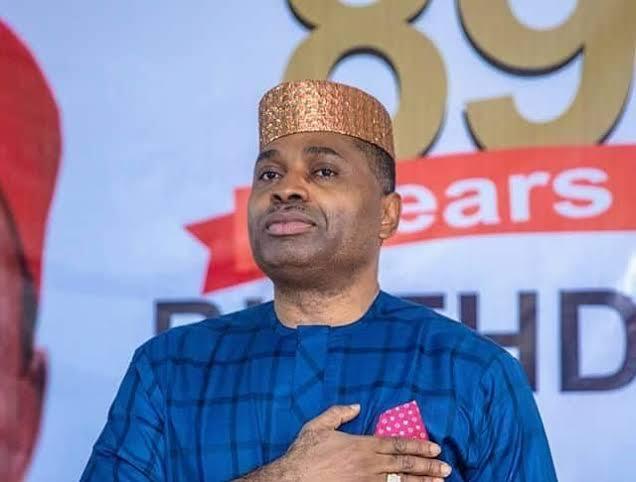
Prominent lawyer, actor, and politician Kenneth Okonkwo has reportedly distanced himself from growing speculation surrounding a possible presidential ticket involving former Vice President Atiku Abubakar and former Rivers State Governor Rotimi Amaechi ahead of the 2027 general election.
Okonkwo's opposition to the proposed arrangement is said to stem from concerns that such a ticket would further sideline the South-East geopolitical zone in Nigeria's power-sharing structure.
His remarks come amid ongoing discussions within opposition circles regarding coalition-building, presidential zoning, and strategies aimed at challenging the ruling party in the next election cycle.
Political conversations intensified following reports and speculations that former Minister of Transportation, Rotimi Amaechi, could emerge as a running mate to former Vice President Atiku Abubakar under an opposition platform. While no official announcement has been made, the possibility has generated significant debate among political stakeholders.
Okonkwo reportedly argued that a ticket pairing Atiku, from the North-East, with Amaechi, from the South-South, would leave the South-East without meaningful representation at the highest levels of national leadership.
According to him, continued exclusion of the region could deepen feelings of political marginalisation among many South-East voters and stakeholders.
The South-East Representation Debate
The question of South-East representation has remained a major issue in Nigeria's political landscape since the return to democratic rule in 1999.
Many political leaders and groups from the region have consistently argued that the South-East deserves a greater opportunity to occupy the nation's highest political office.
Supporters of this position often point out that the region remains the only geopolitical zone yet to produce an elected president in Nigeria's Fourth Republic.
The issue gained further prominence after the 2023 presidential election, when many voters in the region strongly supported alternative political movements that promised greater inclusion and national restructuring.
Okonkwo's Political Position
Kenneth Okonkwo has become an influential voice in opposition politics in recent years.
A former spokesperson for Peter Obi's presidential campaign, he has repeatedly advocated broader political inclusion and has often emphasized the importance of building coalitions that reflect Nigeria's diversity.
His latest comments suggest that any opposition alliance seeking national acceptance must carefully consider regional balance and the concerns of various geopolitical zones.
Analysts note that questions surrounding zoning and equitable representation are likely to remain central issues as political parties prepare for the 2027 elections.
Background: Opposition Coalition Politics
Nigeria's opposition landscape has witnessed significant realignments ahead of the next election cycle.
Former Vice President Atiku Abubakar and Rotimi Amaechi have both been linked to broader coalition efforts designed to unite opposition forces. However, internal disagreements over candidate selection, zoning arrangements, and party processes have continued to generate controversy.
Amaechi himself has previously dismissed reports that he had been offered a vice-presidential position, insisting that no such arrangement had been formally presented to him.
These developments underscore the complex negotiations taking place behind the scenes as opposition figures seek a united front ahead of 2027.
Reactions
Okonkwo's position has generated mixed reactions among political observers.
Supporters argue that his stance reflects legitimate concerns about fairness, inclusion, and national balance.
Others contend that electoral success should be based primarily on political strategy, competence, and coalition strength rather than regional considerations alone.
Political analysts believe the debate illustrates the delicate balance opposition parties must strike between electoral calculations and demands for equitable representation.
Impact on 2027 Calculations
The controversy highlights the broader challenge facing opposition groups as they attempt to build a coalition capable of attracting support across Nigeria's diverse regions.
Questions about zoning, religious balance, ethnic representation, and regional interests are expected to influence alliance negotiations in the coming months.
Observers say how political parties address these concerns could significantly affect voter perceptions and electoral outcomes.
For many stakeholders in the South-East, representation at the highest levels of government remains a key political issue that may shape future alliances.
As coalition talks continue, attention will remain focused on the decisions of major political figures and parties regarding candidate selection and power-sharing arrangements.
No official Atiku–Amaechi ticket has been announced, and political negotiations remain fluid.
However, debates over inclusion, zoning, and national unity are expected to intensify as the 2027 election season approaches.
Kenneth Okonkwo's reported rejection of a potential Atiku–Amaechi ticket has reignited discussions about political representation and the place of the South-East in Nigeria's power structure.
While opposition alliances continue to evolve, the controversy underscores the importance of balancing electoral strategy with demands for inclusion and regional equity.
As political calculations for 2027 gather momentum, issues of zoning and national cohesion are likely to remain at the center of Nigeria's political discourse.SEO Keywords
Kenneth Okonkwo, Atiku Abubakar, Rotimi Amaechi, South-East marginalisation, 2027 election, opposition coalition, Nigeria politics, presidential ticket, zoning debate, political inclusion, ADC politics, South-East representation