


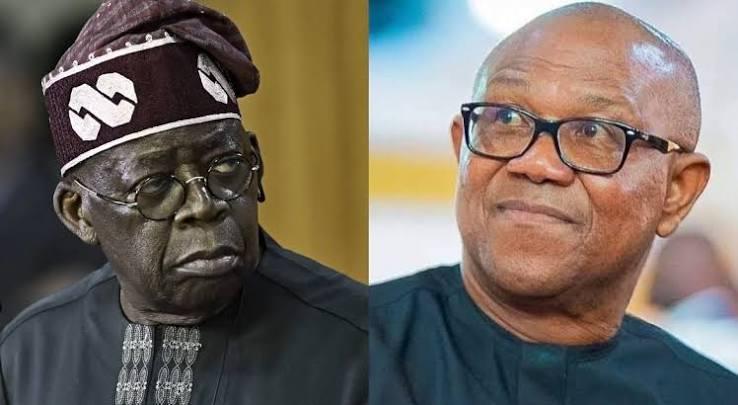
Former Labour Party presidential candidate Peter Obi has called on President Bola Ahmed Tinubu to resign from office, arguing that Nigeria is facing severe economic, security, and governance challenges under the current administration.
Obi's remarks have generated significant political reactions, with supporters and critics offering differing perspectives on his assessment of the country's situation.
The statement comes amid ongoing national conversations about inflation, the cost of living, unemployment, insecurity, and broader concerns over governance and economic reforms.
According to reports, Peter Obi drew comparisons with political accountability practices in other democracies while arguing that Nigerian leaders should take responsibility when governance outcomes fail to meet public expectations.
Referencing recent political developments in the United Kingdom, Obi reportedly suggested that public officials should be prepared to relinquish office when they are unable to effectively address major national challenges.
He argued that many Nigerians continue to struggle with rising living costs, economic uncertainty, and security concerns, and maintained that leadership should be accountable for the country's direction.
The former Anambra State governor stated that the current administration should accept responsibility for the hardships being experienced by citizens.
Nigeria's Economic Challenges
Nigeria has faced significant economic pressures in recent years, including:
- Rising inflation.
- High food prices.
- Currency volatility.
- Youth unemployment.
- Energy costs.
- Foreign exchange challenges.
Economic reforms introduced by the federal government have been defended by officials as necessary steps toward long-term economic stability and growth.
However, many households and businesses have reported increased financial strain as a result of rising costs and economic adjustments.
The debate over how best to address these challenges remains one of the most significant issues in Nigerian politics.
Security Concerns Remain a Key National Issue
Beyond economic concerns, insecurity continues to dominate public discourse.
Various parts of the country have faced challenges including:
- Banditry.
- Kidnapping.
- Armed attacks.
- Communal conflicts.
- Criminal activities affecting rural and urban communities.
Successive administrations have implemented various security measures aimed at addressing these threats.
Nevertheless, security remains a major concern for many citizens and continues to feature prominently in political discussions and policy debates.
Peter Obi's Position
Peter Obi has consistently advocated for governance reforms, fiscal discipline, investment in productive sectors, and policies aimed at improving living standards.
Since the 2023 presidential election, he has remained one of Nigeria's most visible opposition figures, frequently commenting on national issues and government policies.
His latest remarks reflect his broader criticism of what he considers inadequate responses to the country's economic and security challenges.
Supporters argue that his comments highlight legitimate concerns facing ordinary Nigerians, while opponents contend that political criticism should be accompanied by practical alternatives and policy solutions.
Possible Government Response
As of the time of reporting, there may not have been an official response from the Presidency regarding Obi's remarks.
Historically, government officials have defended the administration's economic and policy decisions, arguing that reforms currently underway are designed to produce long-term benefits.
Supporters of the administration frequently point to infrastructure investments, economic restructuring efforts, and initiatives aimed at strengthening public finances as evidence of ongoing governance efforts.
Political observers expect reactions from government officials and ruling party representatives as discussions continue.
Comparisons With International Politics
Obi's comments reportedly referenced leadership accountability in established democracies, where political leaders sometimes resign following electoral setbacks, public pressure, policy failures, or internal party developments.
Political analysts note, however, that each country's political system operates within its own constitutional framework and unique political context.
While comparisons may be useful for public debate, governance outcomes are often influenced by a variety of social, economic, and institutional factors.
Reactions Across the Political Spectrum
The statement has generated mixed reactions among Nigerians.
Supporters
Some supporters argue that Obi's comments reflect the frustrations of citizens dealing with economic hardship and insecurity.
They believe public officials should be held accountable for policy outcomes and governance performance.
Critics
Others view the call for resignation as political rhetoric, arguing that elected leaders should be assessed through constitutional processes and electoral accountability.
They contend that governments require time to implement reforms and address inherited challenges.
Analysts
Political analysts suggest the remarks are likely to intensify political discussions ahead of future elections, as opposition parties seek to position themselves as alternatives to the ruling government.
Why the Debate Matters
The conversation surrounding governance performance has implications beyond politics.
Key issues raised include:
Economic Stability
How government policies affect businesses, investors, and households.
Security
The effectiveness of measures aimed at protecting lives and property.
Accountability
The standards by which elected leaders are evaluated.
Democratic Engagement
The role of opposition voices in shaping public discourse and policy debates.
These issues remain central to Nigeria's democratic development and governance trajectory.
Political observers expect continued debate regarding the administration's performance and the opposition's criticisms.
The Presidency, ruling party officials, opposition leaders, civil society groups, and policy experts are likely to continue engaging on issues relating to governance, economic reforms, and national development.
Ultimately, Nigeria's democratic system provides avenues through elections, public dialogue, legislative oversight, and constitutional processes for addressing political disagreements and evaluating leadership performance.
Political commentators note that calls for resignation by opposition figures are not uncommon in democracies, particularly during periods of economic difficulty or public dissatisfaction.
However, experts emphasize that such calls should be viewed within the context of political competition and democratic advocacy.
They argue that constructive policy debate, evidence-based criticism, and citizen participation remain essential to strengthening democratic institutions.
The broader challenge, analysts say, is ensuring that public discourse translates into practical solutions that improve the lives of citizens.
Peter Obi, Bola Tinubu, Nigerian Politics, Labour Party, Presidency, Governance, Economic Hardship, Insecurity, Political News, Opposition Politics, Democracy, Accountability, JEI TV News, National Affairs, Nigeria News
Peter Obi's call for President Bola Tinubu's resignation has added a new dimension to ongoing national debates about governance, economic management, and accountability.
While supporters see the remarks as a reflection of public frustrations, critics view them as part of normal political contestation in a democracy.
As discussions continue, attention will remain focused on the substantive issues at the heart of the debate—economic recovery, security, governance effectiveness, and the future direction of Nigeria.