


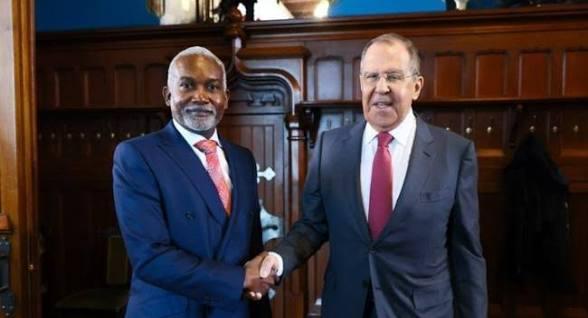
The Russian government has officially welcomed Nigeria’s newly appointed ambassador, Joseph Iji, reaffirming its commitment to expanding diplomatic and economic relations with Africa’s most populous nation.
The ambassador's engagement with senior Russian officials marks another step in the growing relationship between Nigeria and Russia, with both countries expressing interest in enhancing cooperation across several strategic sectors.
During diplomatic discussions in Moscow, officials reportedly explored opportunities for deeper collaboration in trade, investment, science, technology, education, and other areas of mutual interest.
Ambassador Joseph Iji met with senior officials from the Russian Foreign Ministry as part of diplomatic efforts aimed at strengthening ties between the two countries.
The meeting reportedly included discussions on expanding economic cooperation, encouraging business partnerships, and identifying new areas for collaboration.
Russian officials welcomed the ambassador and reiterated Moscow’s readiness to work closely with Nigeria on initiatives that could benefit both nations.
The engagement also reflected Russia’s broader strategy of increasing diplomatic and economic engagement across Africa.
Nigeria–Russia Relations
Relations between Nigeria and Russia date back several decades and have evolved through various political and economic phases.
Both countries have maintained diplomatic ties in areas including:
Trade and investment.
Energy cooperation.
Education and scholarship programs.
Science and technology.
Security and defense collaboration.
Agriculture and industrial development.
In recent years, Russia has expanded its engagement with African nations through bilateral agreements, economic forums, and diplomatic outreach initiatives.
Nigeria, as Africa's largest economy and one of the continent's leading political powers, remains a key partner in these efforts.
Focus on Trade and Economic Cooperation
One of the major themes of the discussions involved strengthening economic cooperation between the two countries.
Analysts note that trade volumes between Nigeria and Russia remain below their full potential despite opportunities in several sectors.
Areas identified for greater collaboration include:
Energy
Both countries possess significant energy resources and have explored cooperation in oil, gas, and related technologies.
Agriculture
Agricultural partnerships could help improve food production, technology transfer, and market access.
Manufacturing
Industrial collaboration remains an area of interest for both governments seeking to diversify their economies.
Infrastructure Development
Investment opportunities in transportation, construction, and public infrastructure continue to attract attention from policymakers and investors.
Science, Technology and Education
Education and scientific cooperation have long been important aspects of Nigeria-Russia relations.
Thousands of African students, including Nigerians, have studied in Russian institutions over the years through scholarship programs and bilateral agreements.
Officials reportedly discussed opportunities to expand collaboration in:
Research and innovation.
Technical education.
Information technology.
Engineering.
Medical sciences.
Experts say such partnerships could contribute to human capital development and knowledge exchange between both countries.
Russia's Growing Interest in Africa
The meeting comes amid increasing Russian engagement with African nations.
In recent years, Moscow has intensified diplomatic outreach through summits, trade forums, and bilateral agreements designed to strengthen economic and political partnerships across the continent.
Observers note that Africa's growing population, expanding markets, and strategic importance have made the region a key area of interest for major global powers.
Countries including Russia, China, the United States, India, Turkey, and members of the European Union have all sought deeper engagement with African economies.
Nigeria continues to pursue a foreign policy focused on strengthening relationships with countries across different regions of the world.
Diplomatic experts say partnerships with global powers can support national development goals through:
Foreign investment.
Technology transfer.
Educational opportunities.
Trade expansion.
Security cooperation.
As Nigeria seeks to diversify its economy and enhance its international influence, maintaining productive diplomatic relationships remains a key priority.
Foreign policy analysts view the ambassador's engagement as a positive step toward revitalizing bilateral cooperation.
Some experts believe stronger Nigeria-Russia ties could create new opportunities in trade and technology.
Others stress the importance of ensuring that diplomatic engagements translate into measurable economic benefits for citizens and businesses.
Analysts also note that successful partnerships depend on sustained implementation of agreements and regular diplomatic dialogue.
With the formal reception of Ambassador Joseph Iji, attention is expected to shift toward concrete initiatives arising from discussions between both countries.
Future engagements may focus on expanding trade, attracting investment, strengthening educational partnerships, and promoting scientific collaboration.
For Nigeria and Russia, the meeting represents an opportunity to deepen a longstanding relationship while exploring new avenues for cooperation in an increasingly interconnected global environment.
As diplomatic ties continue to evolve, stakeholders in both countries will be watching closely to see how discussions translate into tangible outcomes that benefit their economies and citizens.