


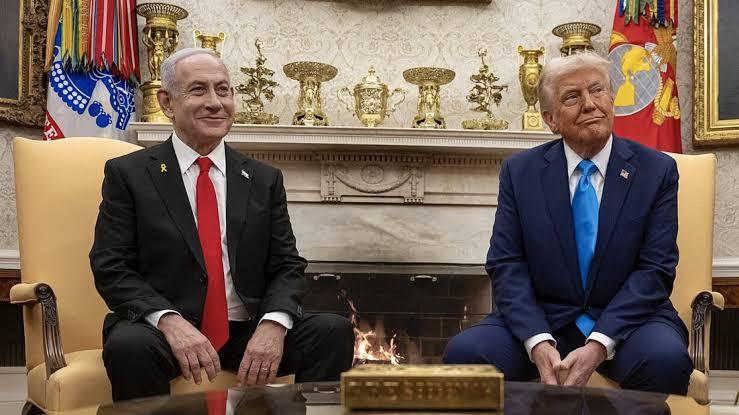
A rare public disagreement between U.S. President Donald Trump and Israeli Prime Minister Benjamin Netanyahu has exposed growing strains in one of the world's most closely watched political alliances.
Trump has confirmed reports that he strongly rebuked Netanyahu during a private phone conversation over Israel's military operations in Lebanon, admitting that he used harsh language while expressing frustration with the Israeli government's actions.
The revelation comes amid heightened tensions across the Middle East, where ongoing hostilities involving Israel, Lebanon, Hezbollah, and Iran have raised fears of a broader regional conflict. Trump's remarks have sparked global debate about the future of U.S.-Israel relations and Washington's role in efforts to stabilize the region.
The controversy emerged after reports surfaced that Trump and Netanyahu engaged in a heated telephone conversation regarding Israel's military campaign in Lebanon.
According to multiple reports, Trump became increasingly frustrated with Israeli actions that he believed could undermine ongoing diplomatic efforts aimed at reducing tensions and advancing negotiations involving Iran and regional actors. Sources familiar with the conversation indicated that Trump accused Netanyahu of escalating the crisis and jeopardizing broader peace efforts.
Speaking during a podcast interview, Trump acknowledged that the reports about the conversation were largely accurate. He confirmed that he had used strong language while discussing the situation with the Israeli leader, although he maintained that the disagreement did not signify a complete breakdown in their relationship.
Trump explained that he was disturbed by the continued military activity in Lebanon and felt the conflict risked spiraling into a larger regional confrontation.
Despite the unusually blunt exchange, Trump emphasized that he still maintains a working relationship with Netanyahu and described their interactions as generally positive.
The Lebanon Crisis and Regional Tensions
The latest dispute cannot be understood without examining the broader geopolitical context.
For months, the Middle East has witnessed escalating confrontations involving Israel, Hezbollah, and Iran. Hezbollah, the powerful Lebanese militant and political organization backed by Iran, has repeatedly exchanged attacks with Israeli forces.
The conflict intensified after a series of military operations and retaliatory strikes that expanded beyond border skirmishes. International observers have repeatedly warned that continued escalation could draw additional countries into the conflict and threaten regional stability.
At the same time, Washington has been pursuing diplomatic efforts designed to prevent a wider war and maintain open channels of communication with regional stakeholders. Any major military escalation risks undermining those negotiations and complicating international peace initiatives.
According to reports, one of Trump's primary concerns was that Israel's military actions in Lebanon could derail sensitive diplomatic discussions involving Iran and other regional actors.
A Historically Strong Alliance Faces New Strains
Trump and Netanyahu have often been viewed as political allies who shared similar approaches to regional security and foreign policy.
During Trump's previous administration, the United States implemented several policies strongly favored by the Israeli government, including recognizing Jerusalem as Israel's capital and supporting key Israeli security priorities.
However, analysts note that even close alliances can face significant tensions when national interests diverge.
The latest dispute appears to reflect growing differences regarding how ongoing conflicts in Lebanon and Iran should be managed. While Israel has emphasized military pressure as a means of addressing security threats, Trump has signaled concern that continued escalation could damage diplomatic opportunities and increase international criticism of Israel.
Political analysts say the public nature of Trump's comments is particularly notable because senior leaders typically avoid discussing private diplomatic disagreements in such explicit terms.
The revelation has generated significant reactions from political observers, diplomats, and foreign policy experts worldwide.
Some analysts view Trump's comments as evidence of Washington's growing frustration with ongoing military operations in the region. Others argue that the remarks demonstrate the complexity of balancing support for Israel's security concerns with broader diplomatic objectives.
Within Israel, political commentators have debated whether the reported conversation signals a temporary disagreement or a deeper shift in relations between the two leaders.
Meanwhile, officials across the Middle East continue to monitor developments closely, especially as ceasefire negotiations and diplomatic initiatives remain fragile.
Experts note that public disagreements between American and Israeli leaders can influence regional calculations, potentially affecting negotiations, military planning, and international diplomacy.
Impact on U.S.-Israel Relations
Although both leaders have attempted to downplay suggestions of a major rupture, the incident has raised questions about the future trajectory of bilateral relations.
The United States remains Israel's most important strategic ally, providing military, diplomatic, and economic support. As a result, disagreements between Washington and Jerusalem often attract global attention.
Foreign policy experts believe the episode demonstrates that even strong partnerships can experience friction during periods of regional instability.
Some analysts argue that Trump's comments may be intended to pressure Israeli leadership into exercising greater restraint. Others believe the exchange reflects genuine frustration over the potential consequences of continued military escalation.
Regardless of interpretation, the conversation has highlighted the difficult balance policymakers face when attempting to manage security threats while pursuing diplomatic solutions.
The coming weeks are expected to be crucial for determining whether diplomatic efforts can reduce tensions across the Middle East.
International mediators continue to push for measures that could prevent further escalation between Israel and Hezbollah while preserving ongoing negotiations involving Iran.
Observers will also be watching for any additional communications between Trump and Netanyahu, as well as policy decisions that may emerge from Washington and Jerusalem.
Should hostilities continue, pressure is likely to increase on regional and global leaders to intervene diplomatically. Conversely, successful ceasefire efforts could help restore momentum to broader peace initiatives.
For now, Trump's public confirmation of the confrontation has provided an unusual glimpse into high-level diplomacy during one of the most volatile periods in the Middle East in recent years.
The significance of this episode extends beyond a single phone call.
It reflects the growing challenges facing world leaders as they navigate overlapping conflicts involving Israel, Lebanon, Hezbollah, and Iran. It also underscores how quickly military developments can affect diplomatic relationships and international negotiations.
As geopolitical tensions continue to evolve, the relationship between Washington and Jerusalem will remain a critical factor shaping regional security and global diplomacy.
Whether the dispute represents a temporary disagreement or a sign of deeper strategic differences remains to be seen. However, the fact that Trump publicly acknowledged the confrontation suggests that the issue has become too significant to remain behind closed doors.
Trump confirms a heated phone call with Netanyahu over Lebanon military operations, exposing growing tensions in U.S.-Israel relations.