


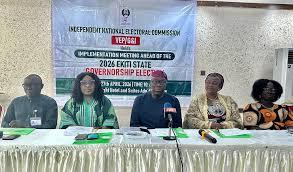
The Independent National Electoral Commission (INEC) has launched a renewed appeal to political leaders, traditional institutions, civil society organizations, religious groups, youth associations, and the media in Ekiti State to support awareness campaigns aimed at increasing the collection of Permanent Voter Cards (PVCs) ahead of the state's 2026 governorship election.
The commission emphasized that voter registration alone is not sufficient for electoral participation, stressing that citizens must collect their PVCs to be eligible to vote on election day. The appeal comes as INEC continues preparations for one of the most significant political contests in the state.
Why PVC Collection Matters
A Permanent Voter Card serves as the official identification document required for accreditation and voting during elections in Nigeria. Since the introduction of biometric voter accreditation systems, PVCs have become an essential tool for ensuring electoral credibility and preventing multiple voting.
According to INEC, thousands of registered voters across various states often fail to collect their cards before elections, resulting in reduced voter participation despite successful registration exercises.
With the Ekiti governorship election approaching, electoral officials believe that increasing PVC collection rates will help improve voter turnout and ensure broader citizen participation in determining the state's political future.
INEC Calls for Collective Action
INEC officials have urged stakeholders to play active roles in educating residents about the importance of collecting their PVCs before the stipulated deadline.
The commission noted that awareness efforts should extend beyond government institutions to include community leaders, market associations, educational institutions, religious organizations, and local influencers who can help spread information to grassroots communities.
According to the electoral body, civic participation remains one of the foundations of democratic governance, and citizens must take advantage of the opportunity to secure their voting credentials.
The commission specifically encouraged registered voters who have completed registration or recently transferred their voter records to visit designated collection centers and retrieve their PVCs before June 11.
Ekiti's Electoral Significance
Ekiti State has long been regarded as one of Nigeria's politically active states, with a history of highly competitive governorship elections.
Since the return to democratic rule in 1999, the state has witnessed intense political contests involving major political parties. Elections in Ekiti often attract national attention due to the state's strategic political influence in Nigeria's South-West region.
The forthcoming 2026 governorship election is expected to be another closely watched contest as political parties prepare to present candidates and campaign for voter support.
Analysts believe that voter turnout could play a decisive role in determining the outcome of the election, making PVC collection a critical component of the electoral process.
Challenges Affecting PVC Collection
Despite continuous voter education efforts by INEC, several challenges have historically affected PVC collection rates across Nigeria.
Some registered voters fail to collect their cards because of relocation, lack of awareness, logistical difficulties, or limited understanding of collection procedures. Others may mistakenly believe that voter registration alone qualifies them to vote.
Election observers have repeatedly highlighted the gap between voter registration figures and actual PVC collection rates as a major concern in Nigeria's democratic process.
Experts argue that bridging this gap could significantly improve electoral participation and enhance the legitimacy of election outcomes.
Role of Traditional and Religious Leaders
Traditional rulers and religious leaders have often played influential roles in voter mobilization and civic education across Nigeria.
Their ability to reach large audiences at the community level makes them important partners in voter awareness campaigns.
INEC's appeal to stakeholders reflects a broader strategy of involving trusted community figures in efforts to increase voter engagement.
Political analysts note that messages delivered through local institutions often resonate more effectively with residents than conventional government announcements.
The Media's Responsibility
Media organizations are also expected to play a key role in amplifying awareness about PVC collection.
Through radio broadcasts, television programmes, newspaper reports, digital platforms, and social media campaigns, journalists can help ensure that voters receive accurate information about collection deadlines, designated centers, and electoral procedures.
As a media organization committed to informing and educating the public, JEI TV recognizes the importance of voter awareness initiatives in strengthening democratic participation.
Public enlightenment campaigns remain essential for encouraging citizens to exercise their constitutional rights responsibly.
Reactions from Stakeholders
Political observers and civil society groups have welcomed INEC's call for increased collaboration.
Many believe that proactive voter education campaigns can help reduce voter apathy and improve participation rates during the election.
Several advocacy groups have also urged residents not to wait until the last minute before collecting their cards, warning that delays could create unnecessary congestion at collection centers.
Community leaders have similarly encouraged eligible voters to take advantage of the collection period and prepare ahead of the election season.
Impact on Democratic Participation
The level of PVC collection in any election cycle often serves as an indicator of public readiness to participate in the democratic process.
Higher collection rates generally translate into greater voter engagement and stronger public confidence in electoral institutions.
Election experts argue that improving access to voter credentials contributes to more inclusive governance by ensuring that a larger proportion of the population can participate in choosing political leaders.
For Ekiti State, increased PVC collection could help strengthen the legitimacy of the eventual election outcome and reinforce public trust in democratic institutions.
What Happens Next?
INEC is expected to continue its voter education campaigns across Ekiti State in the coming days as the June 11 PVC collection deadline approaches.
Stakeholders are likely to intensify sensitization efforts through community outreach programmes, media campaigns, and grassroots mobilization activities.
Eligible voters who have not yet collected their Permanent Voter Cards are advised to visit designated INEC collection centers before the deadline to ensure they are qualified to participate in the 2026 governorship election.
As preparations for the election gather momentum, electoral authorities, political actors, civil society organizations, and citizens will all play crucial roles in ensuring a peaceful, credible, and inclusive democratic process.
Ultimately, the success of the 2026 Ekiti governorship election may depend not only on the conduct of the polls but also on the willingness of citizens to obtain their PVCs and exercise their constitutional right to vote.