



Former Labour Party presidential candidate Peter Obi has once again reiterated his position on the continued detention of Indigenous People of Biafra (IPOB) leader Nnamdi Kanu, stating that he sees no justification for keeping the separatist leader in custody over comments made through media broadcasts.
Speaking during a recent engagement in Washington, D.C., Obi reportedly emphasized the importance of dialogue, consultation, and political engagement in addressing agitations across Nigeria, arguing that democratic societies should prioritize peaceful resolution of disputes rather than prolonged detention.
The remarks have reignited discussions about Kanu's detention, the future of separatist agitations in Nigeria, and the broader debate over national unity, security, and political reconciliation.
What Obi Said
According to Obi, there is no compelling reason for the continued detention of Nnamdi Kanu, especially if the allegations relate primarily to statements made through radio broadcasts or public commentary.
The former Anambra State governor argued that criticism of government officials is a normal part of democratic governance and should not automatically result in prolonged incarceration.
Obi noted that politicians routinely face criticism, insults, and harsh public commentary, adding that public office holders must develop the capacity to tolerate dissenting views.
He maintained that if elected president, he would pursue engagement and dialogue with agitators across different regions of the country rather than relying solely on detention or force.
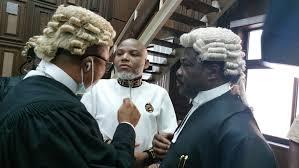
Nnamdi Kanu, leader of the Indigenous People of Biafra (IPOB), has remained one of Nigeria's most controversial political figures.
Kanu has long advocated for the restoration of Biafra, a proposed independent state in Nigeria's South-East region. His activities and broadcasts have attracted both strong support and sharp criticism over the years.
The Federal Government has pursued legal action against Kanu on various allegations, while his supporters continue to demand his release, arguing that political dialogue remains the best path toward resolving tensions in the region.
His detention has generated significant political, legal, and human rights debates both within Nigeria and internationally.
Obi's Consistent Position
Obi's latest remarks align with statements he has made repeatedly in recent years.
The former governor has consistently argued that dialogue should be the primary tool for resolving political grievances and security-related agitations.
In previous interviews, he questioned the rationale behind Kanu's continued detention and stated that meaningful engagement with agitators, community leaders, and stakeholders would be more productive than prolonged confrontation.
According to Obi, governments should be willing to engage individuals and groups expressing grievances, provided such engagement serves the broader objective of national peace and stability.
Debate Over Dialogue and National Security
Obi's comments have once again highlighted differing views on how governments should respond to separatist movements and political agitation.
Supporters of dialogue argue that open communication can reduce tensions, build trust, and create opportunities for peaceful conflict resolution.
Others contend that governments must balance dialogue with the enforcement of laws and the protection of national security, particularly where allegations involve threats to public order or national unity.
Political analysts note that the debate reflects broader questions about governance, inclusion, and how democratic institutions manage dissent.
Reactions
The remarks have generated mixed reactions across political and social circles.
Supporters of Obi's position argue that political disputes are best resolved through negotiation and engagement rather than extended detention.
Some civil society organizations have also advocated political solutions to longstanding disputes affecting different parts of the country.
However, critics insist that legal processes should be allowed to run their course and that decisions regarding Kanu's case must remain within the framework of the law and the judiciary.
Impact on National Discourse
The issue continues to occupy a prominent place in Nigeria's political conversation, particularly in the South-East region.
Analysts say statements by influential political figures such as Peter Obi are likely to keep public attention focused on questions surrounding justice, reconciliation, national integration, and the future of political dialogue in Nigeria.
The debate also reflects broader concerns about how governments respond to dissent, opposition voices, and separatist sentiments within a democratic system.
Nnamdi Kanu's legal proceedings remain ongoing, while calls for either his release or continued prosecution continue to generate public debate.
Political observers expect discussions surrounding political solutions, judicial processes, and national reconciliation to remain part of Nigeria's political landscape ahead of future elections.
For now, Obi's latest comments add another voice to the ongoing conversation about the balance between security considerations and political engagement in addressing complex national issues.
Peter Obi's renewed call for the release of Nnamdi Kanu and his advocacy for dialogue with agitators underscore his longstanding position that political engagement is often more effective than confrontation.
While opinions remain divided on the issue, the debate highlights broader questions about governance, democracy, and conflict resolution in Nigeria. As legal proceedings continue and political discussions evolve, the issue is likely to remain a significant topic in the country's national discourse.SEO Keywords
Peter Obi, Nnamdi Kanu, IPOB, Nnamdi Kanu release, Peter Obi Washington DC, Nigeria politics, separatist agitation, political dialogue, South East Nigeria, IPOB leader, Peter Obi statement, Nigerian democracy