


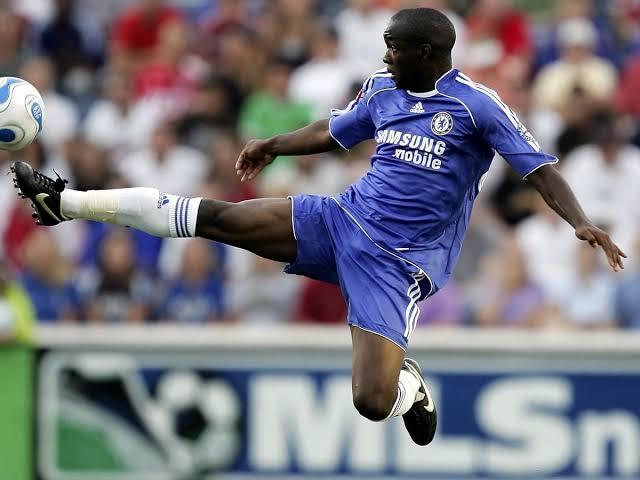
Lassana Diarra Settles €65 Million Transfer Dispute With FIFA and Belgian FA in Landmark Football Rights Case
Article Description
Former France midfielder Lassana Diarra has reached a settlement with FIFA and the Belgian Football Association, ending a long-running €65 million legal battle that challenged global football transfer regulations. The case has already triggered significant changes to FIFA's transfer rules and is being viewed as one of the most influential player-rights disputes in modern football history.
Lassana Diarra Settles €65 Million Transfer Dispute With FIFA and Belgian FA in Landmark Football Rights Case
Former French international footballer Lassana Diarra has formally settled his €65 million legal claim against FIFA and the Royal Belgian Football Association (RBFA), bringing an end to a case that has reshaped discussions about player rights, contract disputes, and the global football transfer system.
The settlement concludes years of legal proceedings stemming from Diarra's dispute with Russian club Lokomotiv Moscow, a conflict that ultimately reached the Court of Justice of the European Union (CJEU) and resulted in one of the most significant rulings affecting football governance in recent decades.
Although the exact terms of the settlement have not been publicly disclosed, football legal experts say the case has already had far-reaching consequences for how player transfers and contractual disputes are handled worldwide.
The legal battle traces back to 2014 when Diarra's contract with Lokomotiv Moscow was terminated following a dispute between the player and the Russian club.
After the termination, FIFA's transfer regulations created obstacles that Diarra argued prevented him from securing employment with another club under fair conditions.
The former midfielder claimed that FIFA's rules effectively restricted his freedom of movement and employment opportunities, causing significant financial losses and damage to his professional career.
As a result, Diarra launched legal proceedings seeking approximately €65 million in compensation from FIFA and the Belgian Football Association.
The case eventually moved through European courts and became a major test of whether FIFA's transfer rules were compatible with European Union laws governing employment and competition.
The Dispute With Lokomotiv Moscow
Diarra joined Lokomotiv Moscow after playing for some of Europe's biggest clubs, including:
- Chelsea FC
- Arsenal FC
- Real Madrid CF
- Olympique de Marseille
In 2014, disagreements emerged between the player and Lokomotiv Moscow over contractual obligations.
The Russian club subsequently terminated Diarra's contract and sought financial compensation, arguing that the player had breached the agreement.
Diarra challenged the decision, claiming the circumstances surrounding the termination were unfair and that FIFA's regulations made it extremely difficult for him to continue his career elsewhere.
The dispute evolved into a broader challenge against football's international transfer system.
Landmark European Court Ruling
The turning point came when the Court of Justice of the European Union delivered a landmark judgment that questioned aspects of FIFA's transfer regulations.
The court found that certain provisions could restrict the freedom of professional footballers to move between clubs and potentially limit competition within the football labor market.
Legal analysts compared the significance of the ruling to previous landmark sports cases that transformed athlete rights across Europe.
The decision raised important questions about whether international sports governing bodies can impose regulations that conflict with broader employment and competition laws.
Following the ruling, FIFA began reviewing and modifying parts of its transfer framework to ensure compliance with legal requirements.
Why the Case Matters for Football
The Diarra case extends beyond a dispute involving a single player.
It touches on fundamental issues affecting professional footballers worldwide, including:
Player Mobility
The ruling strengthened arguments that footballers should enjoy employment freedoms similar to workers in other professions.
Contract Disputes
The case challenged existing mechanisms that determine how players and clubs resolve disagreements after contract terminations.
Transfer Regulations
Several aspects of FIFA's transfer system have come under increased scrutiny, prompting reforms designed to improve fairness and transparency.
Legal Accountability
The outcome demonstrates that international sports governing bodies can face legal challenges when regulations are perceived to conflict with national or regional laws.
Reactions Across Football
The settlement has generated widespread discussion throughout the football community.
Player unions and athlete-rights advocates have welcomed the outcome, arguing that the case highlights the need for stronger protections for professional footballers.
Some legal experts believe the ruling could encourage other athletes to challenge regulations they consider restrictive or unfair.
Meanwhile, football administrators have emphasized the importance of maintaining regulatory structures that ensure contractual stability and competitive balance within the sport.
Many clubs are expected to closely monitor any further regulatory changes that emerge as a result of the case.
Impact on FIFA's Transfer System
FIFA has already introduced adjustments to certain transfer regulations following legal developments linked to the Diarra case.
The governing body has stated that it remains committed to protecting contractual stability while ensuring compliance with applicable legal standards.
Experts suggest the case could influence future reforms involving:
- International transfers
- Contract termination procedures
- Player compensation rules
- Registration requirements
- Cross-border employment disputes
The long-term impact may extend beyond Europe and affect football governance on a global scale.
Lassana Diarra's Football Legacy
Beyond the legal battle, Diarra enjoyed a distinguished playing career.
The midfielder earned numerous appearances for the French national team and represented several elite European clubs during a career spanning more than a decade.
Known for his defensive qualities, tactical intelligence, and work ethic, Diarra was widely regarded as one of the most reliable midfielders of his generation.
However, his legal challenge may ultimately become one of his most enduring contributions to the sport, influencing the rights of footballers long after his retirement.
While the settlement officially closes the dispute between Diarra, FIFA, and the Belgian Football Association, its broader consequences are likely to continue shaping football governance.
Legal experts anticipate further discussions regarding player rights, transfer regulations, and employment protections within professional football.
FIFA is expected to continue reviewing its rules to ensure they align with evolving legal standards, while clubs, players, and football associations monitor developments closely.
For many observers, the Diarra case represents a pivotal moment in the ongoing evolution of football's regulatory framework and the balance between player rights and contractual stability.